

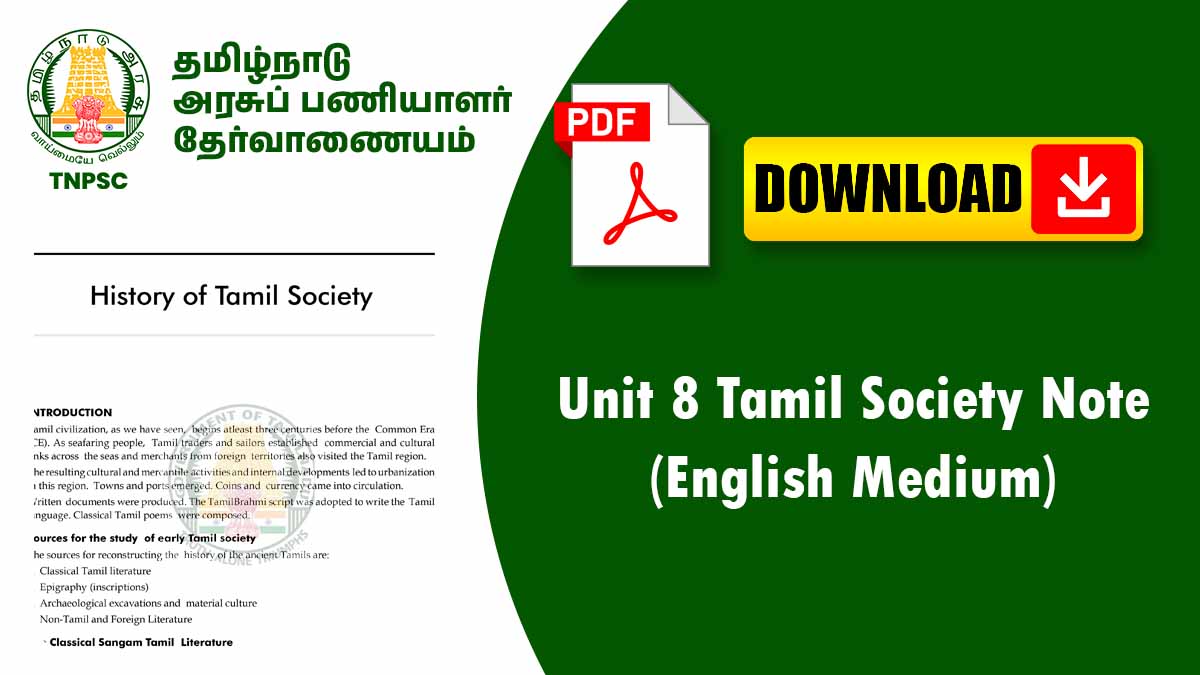
The History of Tamil Society is one of the oldest and richest in India. Rooted in ancient traditions, it reveals how Tamils developed a distinctive civilization known for literature, art, religion, and social harmony. Tamil society evolved through different stages — from tribal life to organized kingdoms — maintaining its identity across centuries.
🏺 1. Sangam Age (500 BCE – 300 CE)
- The earliest record of Tamil society appears in Sangam literature, written by poets and scholars.
- Society was divided according to natural regions called Tinai – Kurinji (hills), Mullai (forests), Marutham (plains), Neithal (coast), and Palai (desert).
- Social classes were based on occupation, not caste rigidity.
- Women enjoyed equal respect; scholars like Avvaiyar and Nachchellaiyar were celebrated poets.
🕉️ 2. Religion and Philosophy
- Early Tamils worshipped nature deities such as Murugan, Kotravai, and Indra.
- Later, Saivism and Vaishnavism became dominant, while Buddhism and Jainism influenced ethics and education.
- Temples became centers of learning, culture, and social welfare.
⚖️ 3. Political Structure
- The three great dynasties — Chera, Chola, and Pandya — ruled the Tamil region.
- Kings were assisted by councils called Sabha and Ur.
- Justice, defense, and trade were given high importance.
💰 4. Economic and Social Life
- Agriculture was the backbone; paddy, sugarcane, and cotton were major crops.
- The Tamils traded with Rome, Egypt, and Southeast Asia through maritime routes.
- People valued education, honesty, and hospitality. Family was the core of society.
🎭 5. Art, Literature & Culture
- The Sangam poems like Purananuru and Akananuru describe daily life, love, and war.
- Dance, drama, and music flourished under royal patronage.
- The Cholas elevated temple architecture — such as the Brihadeeswarar Temple — to global fame.
💡 Conclusion / Study Tips
Tamil Society reflects an unbroken cultural line from the ancient Sangam era to modern Tamil Nadu. For TNPSC and other competitive exams, focus on:
- Sangam Age social structure
- Role of women
- Religious influence
- Trade and administration
Regular revision of these points helps in answering both short and descriptive questions effectively.
⚡ குறிப்பு: PDF பதிவிறக்கம் ஆகவில்லை என்றால்
VPN அல்லது மற்றொரு நெட்வொர்க் முயற்சி செய்யுங்கள். நன்றி 🙏
🔔 For more updates & free PDFs, join or follow us below 👇
💬 Join WhatsApp 📢 Join Telegram 📸 Follow Instagram ⭐ Add on Google